
What Makes Coles Australia Product Data API Crucial for Accurate Grocery Pricing & Inventory Tracking?
Introduction
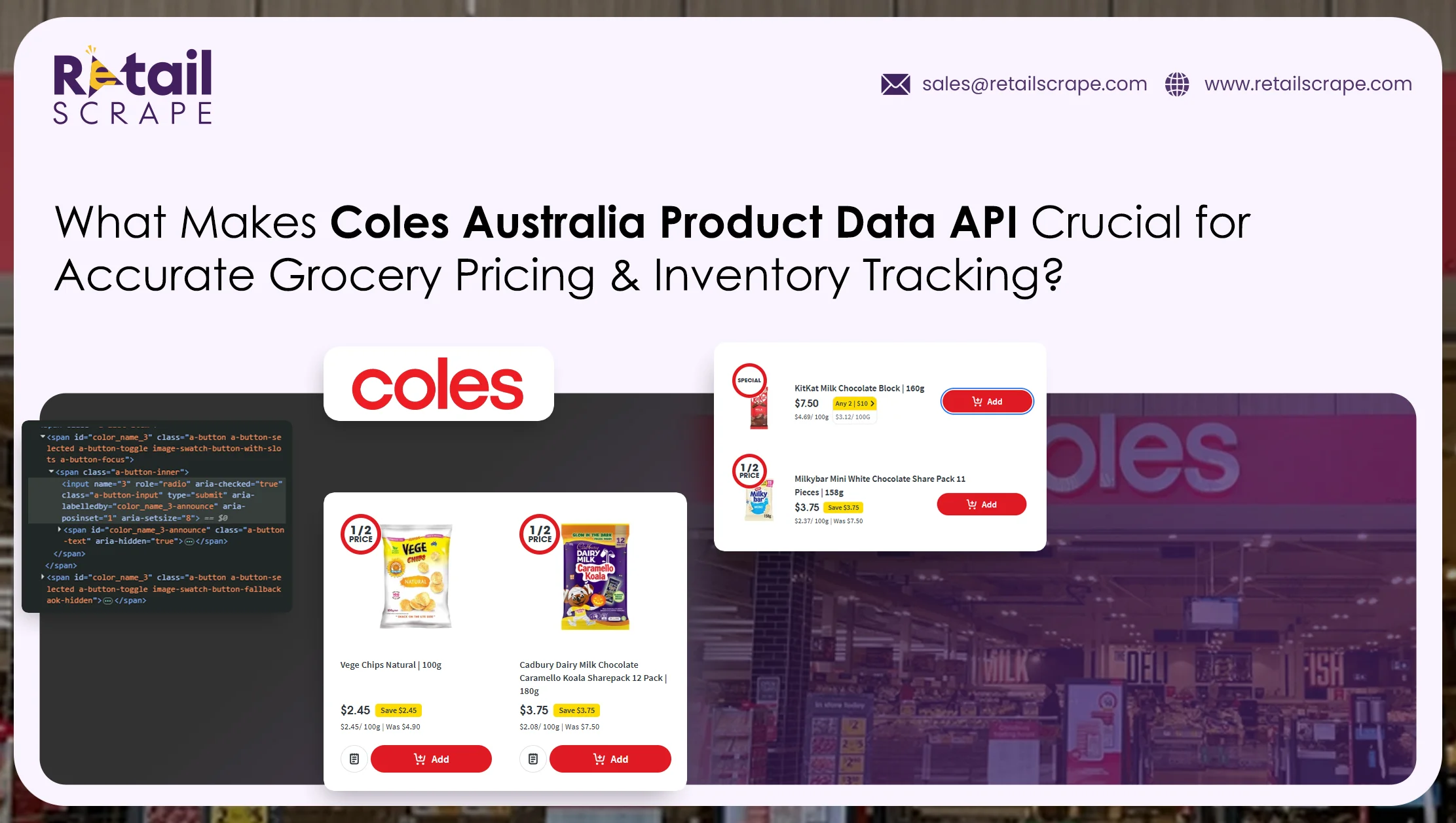
Navigating the dynamic Australian supermarket ecosystem requires precise pricing intelligence and inventory visibility. Modern retail brands, competitive analysts, and e-commerce platforms struggle to track rapid promotional updates and stock shifts that manual collection methods fail to capture. Incorporating the Coles Australia Product Data API provides a reliable solution, converting unstructured shelf data into structured insights for timely business decisions.
Supermarket intelligence relies heavily on real-time data flow. Automated API feeds eliminate visual checking and legacy manual scraping pipelines, delivering direct access to live store updates across regions. This strategic accessibility ensures businesses identify regional pricing variations, dynamic markdowns, and stock depletion trends before competitors can adapt to shifting market signals.
By establishing automated data channels, enterprise teams can continuously analyze pricing tactics, seasonal demand, and supply chain adjustments. Deploying a dedicated API framework empowers business systems to feed reliable catalog metrics into internal dashboards, optimizing pricing models and stocking strategies across competitive retail landscapes.
Optimizing Dynamic Price Intelligence Across High Velocity Supermarket Channels
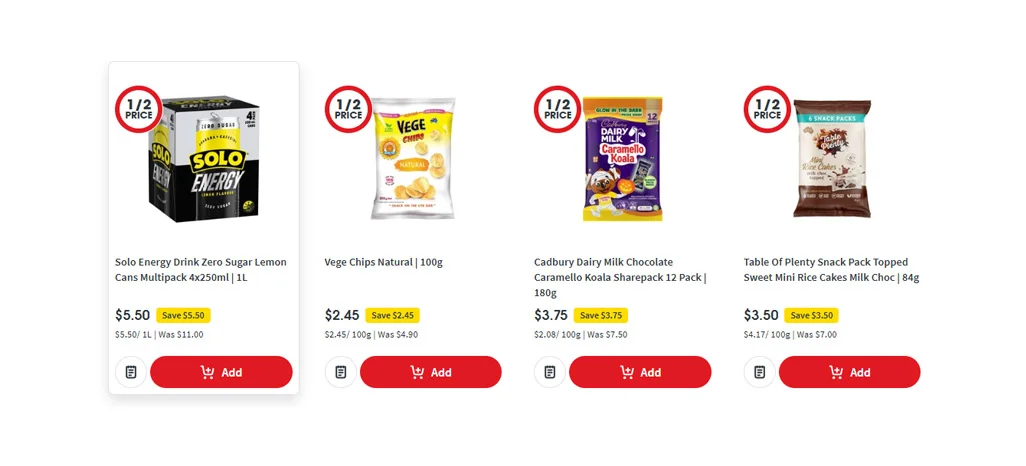
Navigating Australia’s online and offline retail markets requires continuous price monitoring due to localized promotional shifts and daily price drops. Brands and commercial analysts rely on structured metrics to adapt pricing models and evaluate market shifts without latency. Utilizing Australia Grocery Price Monitoring allows e-commerce managers to track fluctuations, promotional depth, and pricing strategies across regions in real time.
Operating without automated updates creates risk in high-velocity product categories where price matching drives customer retention. Structured data collection captures exact shelf values, multi-buy savings, and clearance indicators as they happen on digital channels. Employing Coles Product Data Extraction equips business platforms with clean information that improves competitive awareness across major retail categories.
| Metric / KPI | Industry Baseline (Manual Tracking) | API-Driven Monitoring Baseline | Operational Advantage |
|---|---|---|---|
| Price Update Frequency | Daily / Weekly sampling | Real-time / Hourly feeds | Rapid pricing response |
| Pricing Accuracy Rate | 82% (Human error risk) | 99.8% (Structured data) | Eliminates mispricing risks |
| Promotional Tracking | Delayed capture | Instant capture | Proactive promotional matching |
| Regional Variance Capture | Limited locations | Multi-postcode coverage | High regional precision |
Recent retail studies show that top grocery chains adjust prices on over fifteen percent of active SKUs weekly in response to supply chain shifts and market competition. Relying on delayed data collection leads to profit margin erosion and unaligned marketing strategies. Systematic monitoring eliminates guesswork by maintaining continuous visibility into competitor movements across every consumer tier.
- Live tracking of core consumer goods across national distribution channels.
- Instant verification of promotional tags, bundle discounts, and volume offers.
- Hourly price synchronization across physical stores and digital storefronts.
- Automated comparison against target retail category benchmarks.
Accessing direct data feeds gives business systems continuous access to verified category metrics. Integrating these automated streams ensures dynamic pricing models align directly with current market conditions. With systematic tracking, business analysts optimize catalog strategies and safeguard profit margins while responding immediately to aggressive competitor price changes.
Streamlining Complete Shelf Inventory and Product Catalog Availability Systems
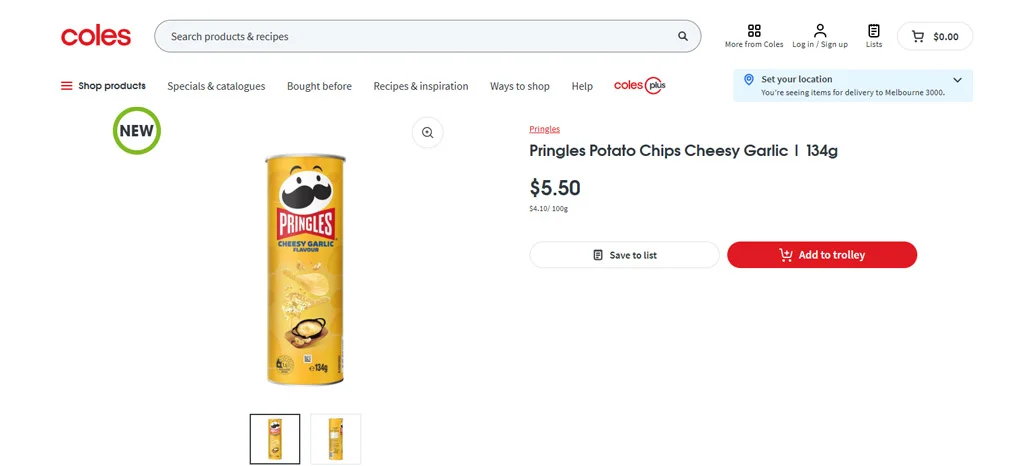
Maintaining complete visibility over product availability and stock levels prevents operational delays and lost commercial opportunities across supply networks. Modern retail systems track real-time stock status, sub-category organization, and fulfillment limits to understand regional supply fluctuations. Implementing Coles Grocery Data Scraping ensures backend automated systems capture localized stock movements across key Australian postcodes seamlessly.
Having continuous catalog metrics allows supply chain planners and vendor teams to evaluate inventory distribution across regions. Analyzing live stock counts alongside historical data gives commercial teams the visibility required to resolve distribution bottlenecks. This proactive inventory visibility supports smoother store replenishment, optimized distribution planning, and consistent product fulfillment.
| Stock & Catalog Metrics | Data Extraction Focus | Strategic Value |
|---|---|---|
| Stock Status (In/Out) | Real-time SKU availability | Informs localized logistics |
| Unit Pricing & Volume | Price per unit / Weight metrics | Standardizes basket analysis |
| Product Attributes | Ingredients, dietary tags, brand | Enhances catalog mapping |
| Promotional Tags | Multibuy offers, clearance flags | Highlights competitor moves |
Industry data indicates that localized out-of-stock events average seven to twelve percent across high-demand grocery segments during peak shopping periods. Automated inventory tracking mitigates stockout risks by alerting supply chain operators before product depletion impacts overall sales volume. Consistent data feeds help businesses maintain high customer satisfaction rates and steady revenue streams across channels.
- Continuous monitoring of localized out-of-stock indicators per location.
- Automated extraction of detailed product specifications and pack sizes.
- Real-time indexing of newly introduced SKUs and seasonal categories.
- Structured catalog classification aligned with internal data warehouses.
Evaluating localized product metrics enables procurement teams to address distribution challenges before supply gaps disrupt retail channels. Systematic stock oversight strengthens partner relationships and optimizes promotional campaigns by verifying item availability before marketing launches. Enterprise platforms leverage these automated datasets to streamline inventory workflows and maintain strong market positioning nationwide.
Benchmarking Supermarket Retail Competitor Intelligence for Strategic Market Advantage
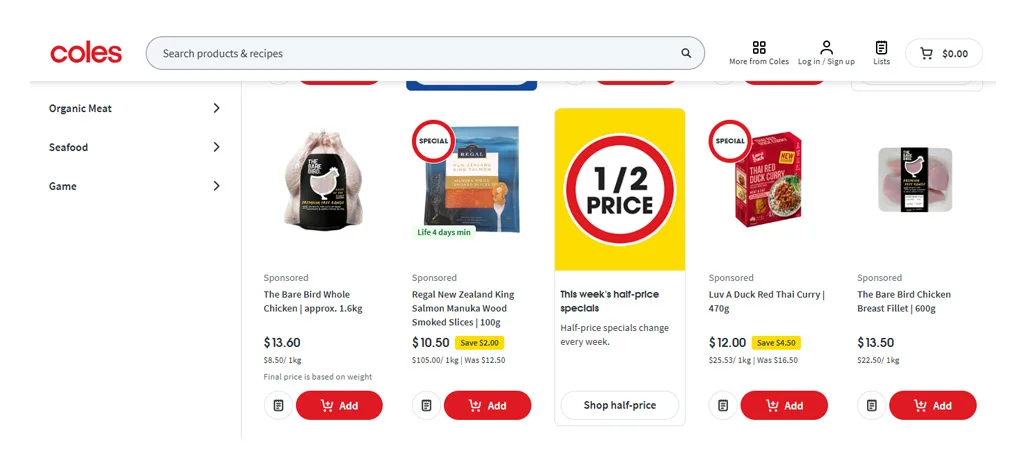
Sustaining revenue growth in competitive grocery markets requires ongoing competitor analysis and thorough category benchmarking. Systematic evaluation of rival pricing strategies, private-label expansions, and discounting frequency highlights market opportunities. Performing regular Australian Supermarket Price Comparison helps market players assess catalog depth and track promotional intensity across competing grocery ecosystems.
Commercial intelligence platforms use structured datasets to track long-term price movements and promotional cycles. Analyzing historical trends alongside live shelf pricing exposes broader category shifts and seasonal discounting patterns. Accessing clean data via Coles Price Tracking API streams accurate metrics straight into enterprise business intelligence dashboards for timely analysis.
| Analysis Category | Key Metrics Monitored | Strategic Application |
|---|---|---|
| Price Elasticity | Discount frequency vs. sales rank | Optimizes markdown strategies |
| Private Label Expansion | Own-brand introduction rates | Assesses private-label growth |
| Category Benchmarking | SKU count per sub-category | Identifies assortment gaps |
| Discount Depth | Percentage reduction trends | Evaluates promotional impact |
Data shows that structured grocery market intelligence helps enterprise brands improve overall gross margins by up to three point five percent through strategic discount planning. Automated data pipelines eliminate reliance on manual price checks, allowing enterprise teams to base commercial strategies on empirical market evidence rather than speculative trends.
- Long-term trend analysis of discount depths across major product lines.
- Automated tracking of competitor private-label growth and price positioning.
- Precise monitoring of seasonal promotional campaigns and catalog updates.
- Category-wide basket benchmarking to assess relative market competitiveness.
Establishing continuous market intelligence feeds enables enterprise analysts to build predictive pricing models and refine retail promotional schedules. Combining historical data with real-time tracking gives vendor management teams exact facts for negotiating favorable trade terms during annual reviews. Strategic access to reliable market data secures a lasting advantage across evolving consumer environments.
How Retail Scrape Can Help You?
Modern enterprise teams require automated data pipelines to gather actionable supermarket insights without managing complex scraping infrastructure. Deploying the Coles Australia Product Data API through specialized data extraction partners ensures consistent, high-yield product intelligence delivered directly to your database systems.
We handle the complete data engineering lifecycle, ensuring clean delivery across complex retail catalogs:
- Fully managed automated scrapers handling IP rotation and anti-bot obstacles.
- Customizable data delivery schedules tailored to hourly, daily, or weekly needs.
- Standardized output formats including JSON, CSV, and direct database feeds.
- High-precision extraction covering pricing, stock status, ingredients, and promotions.
- Multi-location postal code targeted scraping for precise regional insights.
- Continuous maintenance and monitoring to adapt to retail website structure changes.
By utilizing high-grade Coles Grocery Datasets, commercial teams can focus entirely on strategic decision-making while automated pipelines manage backend enterprise data collection reliably.
Conclusion
Utilizing the Coles Australia Product Data API for Real-Time Price Tracking empowers enterprise analysts and retail managers to monitor price volatility, track localized inventory movements, and benchmark product performance across competitive markets without manual intervention.
Incorporating continuous feeds allows commercial teams to Track Coles Product Prices and Inventory seamlessly, maintaining a strong commercial posture, protecting profit margins, and driving long-term enterprise growth in today's rapidly changing retail ecosystem. Contact Retail Scrape today to start building your custom grocery data extraction pipeline.