How Does Blinkit vs Bigbasket Grocery Price Comparison Highlight 25% Savings on Top Grocery Products?
Introduction
India’s quick commerce boom has transformed how consumers purchase everyday essentials, but it has also created an intense pricing battlefield between platforms. This is where Blinkit vs BigBasket Grocery Price Comparison becomes a powerful decision-making approach for brands, retailers, and even platform strategists looking to capture customer attention and improve conversions.
The reality is that small pricing differences across daily essentials like milk, bread, rice, and snacks can influence large-scale customer loyalty. This shift is pushing brands to adopt Grocery Price Intelligence systems that continuously track product-level pricing, offers, and pack-size changes across multiple platforms.
As consumer demand rises, retailers must focus on smart pricing analysis, margin protection, and product positioning. With frequent flash discounts and platform-specific deals, manual tracking is no longer effective. Ultimately, the brands that monitor these price trends consistently can outperform competitors by aligning pricing with real-time consumer expectations.
Daily Basket Price Shifts That Shape Savings
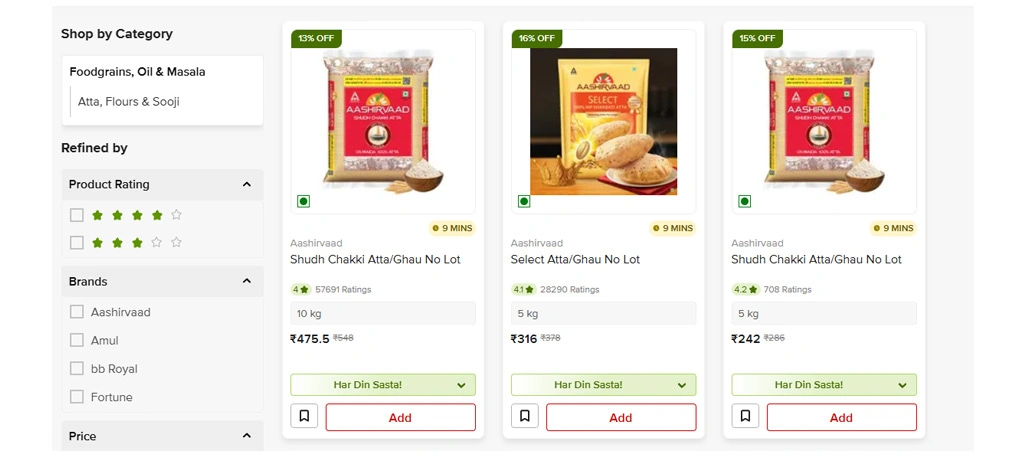
Price competition in India’s quick commerce space is becoming more aggressive every week, especially in high-frequency categories like dairy, snacks, beverages, and staples. This is where Blinkit vs BigBasket Grocery Pricing Monitoring becomes essential for retailers and brands trying to protect sales volume and maintain price credibility across platforms.
Blinkit often pushes short-duration discounts to increase rapid order flow, while BigBasket tends to maintain a more stable baseline price and supports bulk purchase incentives. This is why businesses now invest in Real-Time Grocery Price Comparison Blinkit vs BigBasket to identify sudden discount drops, pack-size pricing inconsistencies, and promotional timing trends.
Market observations suggest that quick commerce pricing fluctuations can create 10%–18% variation in cart totals across common grocery products. These gaps are even stronger during weekends and festive periods when platforms push targeted discounts.
| Product Category | Blinkit Avg Price (₹) | BigBasket Avg Price (₹) | Estimated Savings (%) |
|---|---|---|---|
| Dairy Essentials | 52 | 58 | 10% |
| Packaged Snacks | 95 | 110 | 14% |
| Cooking Staples | 140 | 165 | 15% |
| Personal Care | 199 | 235 | 15% |
| Beverages | 75 | 90 | 17% |
Such variations highlight the importance of Blinkit vs BigBasket Quick Commerce Pricing Analysis, as businesses can pinpoint which categories are driving the highest price-sensitive switching behavior and refine their competitive pricing plans accordingly.
Household Monthly Spending Patterns Across Platforms
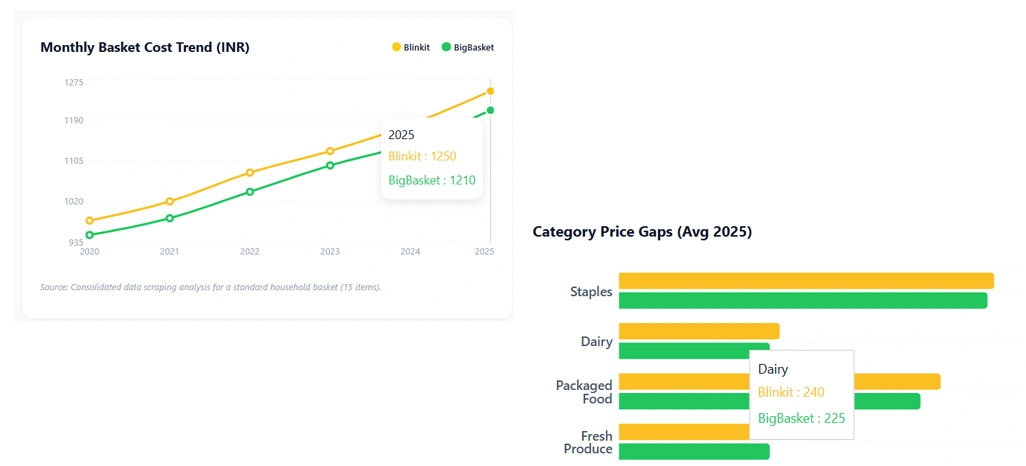
Family buying the same essentials every week will naturally shift platforms if the overall monthly spend becomes noticeably higher. This is why retailers increasingly rely on Blinkit vs BigBasket Monthly Grocery Cost Comparison to understand which platform consistently delivers lower basket totals for common household requirements.
For example, working professionals and small families often prioritize convenience and fast delivery, but they still respond strongly to pricing gaps in frequently purchased products like milk, bread, rice, and packaged foods. This trend becomes clearer through Blinkit vs BigBasket Price Comparison Using Data, where average cart totals are calculated using structured pricing history.
Research-based consumer tracking suggests that even a ₹10–₹15 difference per product can convert into ₹1,000+ savings over a full month, especially for households ordering multiple times weekly. This creates a measurable impact on retention and platform switching, supporting Blinkit and BigBasket Price Difference Analysis for long-term strategic planning.
| Household Type | Monthly Spend Blinkit (₹) | Monthly Spend BigBasket (₹) | Monthly Difference (₹) |
|---|---|---|---|
| Single Professional | 4,200 | 4,800 | 600 |
| Small Family (2–3) | 7,500 | 9,000 | 1,500 |
| Medium Family (4–5) | 11,200 | 13,400 | 2,200 |
| Large Family (6+) | 15,800 | 18,500 | 2,700 |
These insights also strengthen Online Grocery Platforms Price Optimization India, allowing brands to plan promotions and pricing alignment more efficiently.
Availability Gaps and Data-Based Pricing Signals
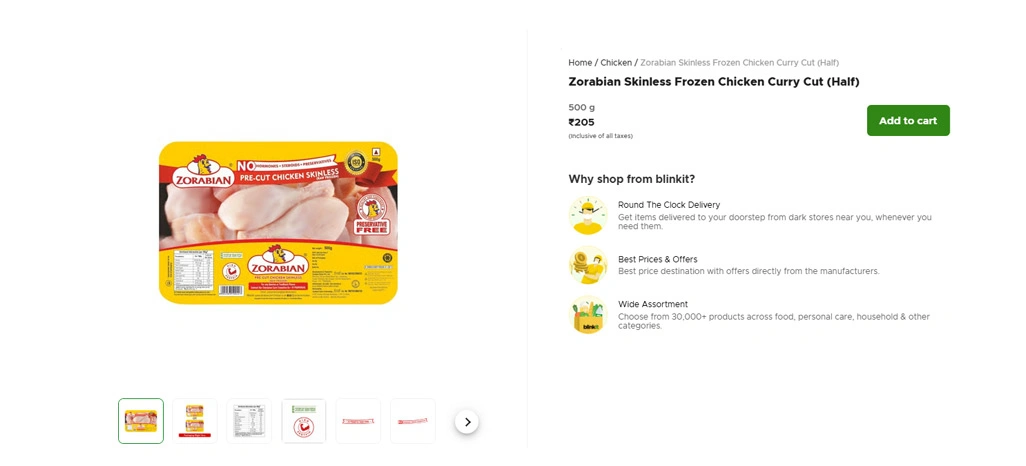
Pricing alone does not define customer purchase decisions in grocery delivery. Product availability, pack-size options, and city-level inventory depth strongly influence which platform a shopper chooses. This is why data-driven teams increasingly focus on catalog coverage and availability trends alongside pricing performance.
BigBasket generally offers wider product depth, while Blinkit focuses on fast-moving essentials and high-demand urban SKUs. This difference becomes easier to evaluate when businesses analyze structured datasets and SKU-level performance history. For analysts, BigBasket Datasets provide a clearer view of category distribution, product frequency, and inventory-level availability across multiple locations.
Industry insights indicate that cart abandonment rises significantly when preferred brands are missing, especially in categories like personal care, cleaning supplies, and fresh produce. To solve this, companies now adopt Data-Driven Grocery Pricing Comparison in India, combining price and availability insights to build smarter decisions for product listing strategies and supply planning.
| Category | Blinkit Availability | BigBasket Availability | Price Fluctuation Range |
|---|---|---|---|
| Fresh Produce | 72% | 88% | 8%–18% |
| Dairy Products | 91% | 95% | 5%–12% |
| Snacks & Packaged Food | 89% | 93% | 10%–20% |
| Cleaning Supplies | 78% | 90% | 7%–15% |
| Personal Care | 75% | 92% | 6%–16% |
These patterns show that product depth and stock stability remain critical, and they also support stronger planning for pricing, inventory allocation, and promotional distribution.
How Retail Scrape Can Help You?
Retail brands and grocery businesses need more than manual tracking to understand quick commerce competition. With the right system, Blinkit vs BigBasket Grocery Price Comparison becomes a continuous performance advantage rather than a one-time report.
Key Support Areas Offered by us:
- Track daily price shifts across essential and premium categories.
- Monitor discount timing trends across multiple cities.
- Compare pack-size based pricing differences for better accuracy.
- Identify frequently underpriced SKUs affecting brand margins.
- Detect stock-out patterns impacting category revenue.
- Build competitor benchmarking reports for leadership teams.
By integrating Blinkit vs BigBasket Product Availability Price Analysis, we help retailers and brands improve inventory planning and pricing decisions while ensuring their products remain competitive in fast-moving grocery markets.
Conclusion
Modern grocery competition is no longer based only on delivery speed or product variety. A well-structured Blinkit vs BigBasket Grocery Price Comparison allows brands and retailers to clearly identify where customers are saving more, where margins are being pressured, and which categories require immediate strategic pricing correction.
With Real-Time Grocery Price Comparison Blinkit vs BigBasket, businesses can improve decision-making, reduce pricing mismatches, and build smarter promotional strategies. Connect with Retail Scrape today and build a stronger pricing strategy for long-term growth.