How to Scrape Grocery Prices With UPC-Level Matching to Capture 99% Accurate Multiple Retailers Data?
Introduction
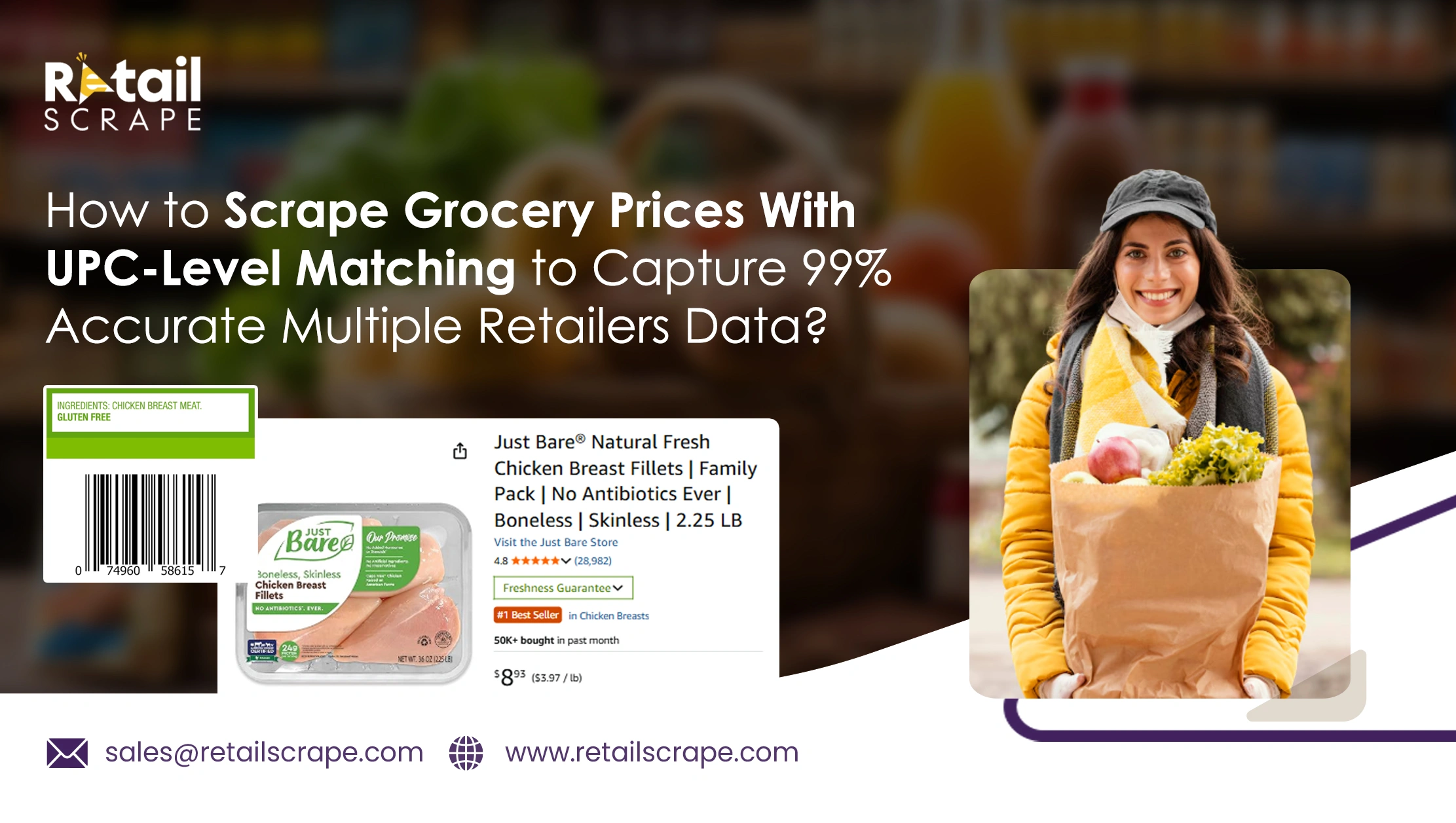
In today’s highly competitive grocery ecosystem, retailers and brands must rely on precise and standardized data to make effective pricing decisions. One of the biggest challenges in grocery analytics is inconsistent product identification across platforms. This is where UPC-Based Price Comparison Scraping becomes essential, enabling businesses to align products accurately across various retailers.
Using UPC (Universal Product Code) as a unique identifier helps eliminate ambiguity in product matching and ensures consistency across datasets. By leveraging structured data extraction methods, companies can improve their ability to compare prices, monitor competitors, and identify pricing gaps with confidence. When organizations Scrape Grocery Prices With UPC-Level Matching, they achieve a unified dataset that reflects true market dynamics across multiple channels.
Additionally, accurate product matching enhances demand forecasting, assortment planning, and promotional analysis. Businesses that adopt UPC-level data strategies benefit from improved decision-making, reduced errors, and increased operational efficiency. As the grocery sector continues to evolve, integrating UPC-based intelligence into pricing strategies is no longer optional—it’s a necessity for sustained growth and competitive advantage.
Resolving Product Identification Challenges Across Diverse Retail Platforms
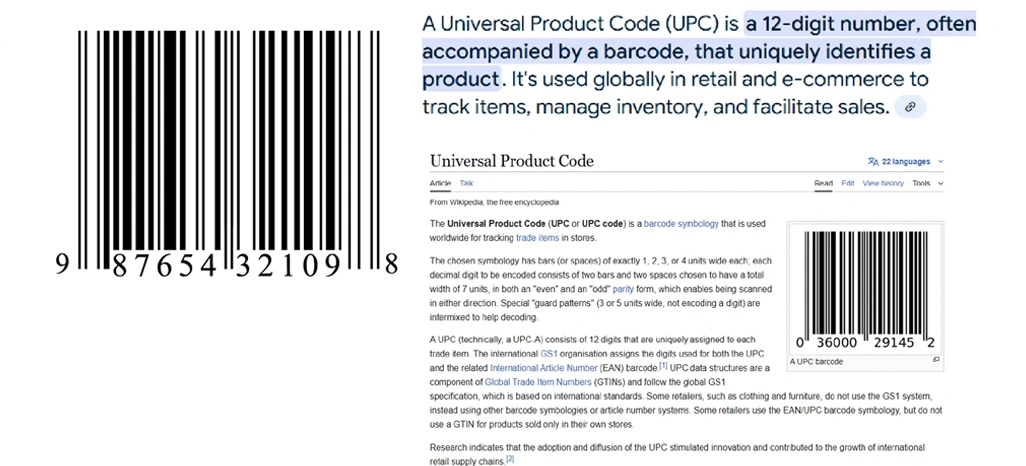
In the grocery ecosystem, inconsistent product representation across retailers often leads to inaccurate pricing comparisons and unreliable datasets. Variations in product titles, packaging formats, and descriptions create confusion when aligning identical items. This challenge becomes more complex when dealing with large-scale datasets across multiple platforms, making standardized identification essential for meaningful analysis.
To overcome these limitations, businesses are increasingly adopting Scrape Supermarket Prices With Product Matching, which ensures accurate alignment of products regardless of listing differences. Additionally, integrating Product Matching Using Barcode and UPC Data provides a unique identifier that eliminates duplication and inconsistency across datasets.
Another critical aspect is Grocery Price Scraping Across Multiple Retailers, which enables organizations to build a unified and structured dataset. This approach enhances visibility into cross-platform pricing and improves competitive benchmarking accuracy.
Key Impact of Standardized Matching:
| Challenge | Resolution Approach | Business Impact |
|---|---|---|
| Inconsistent product names | Barcode-based mapping | Improved accuracy |
| Duplicate product entries | Unique identification filtering | Clean datasets |
| Packaging variations | Standardized UPC alignment | Better comparability |
Industry insights suggest that businesses implementing structured matching techniques experience up to 30% higher data accuracy and significantly improved analytical efficiency. This allows organizations to make informed pricing decisions and maintain consistency across their retail intelligence strategies.
Improving Pricing Precision Through Automated Data Synchronization Systems
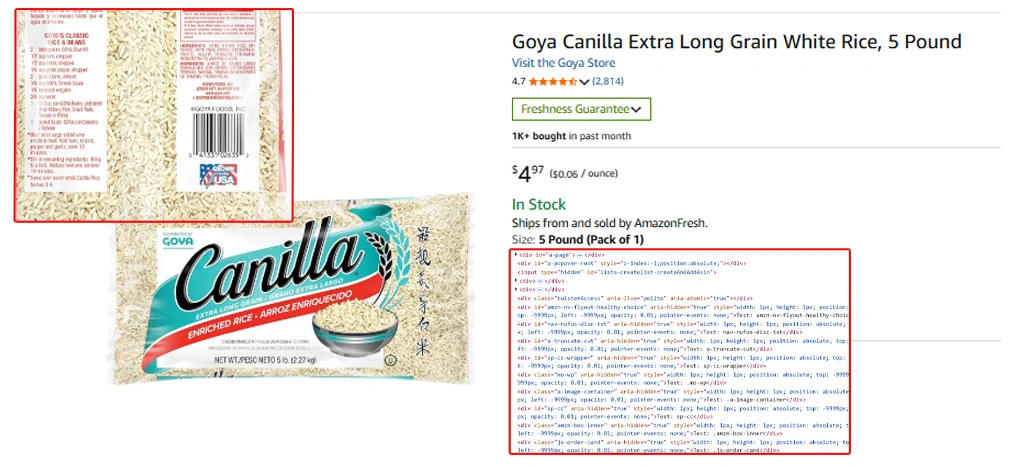
Accurate pricing intelligence requires seamless data synchronization across multiple retail platforms. Manual data collection methods often introduce errors and delays, limiting the effectiveness of pricing strategies. Automated systems provide a scalable solution by ensuring real-time updates and consistent product alignment.
By leveraging an API for Grocery Price Scraping With UPC Matching, businesses can automate data extraction while maintaining precise product identification. This approach significantly reduces operational inefficiencies and improves the speed of data processing across large datasets.
Furthermore, understanding the Benefits of Upc-Based Product Matching in Grocery Scraping allows organizations to enhance the reliability of their pricing insights. Standardized identification ensures that price comparisons are accurate and consistent, even when dealing with high-volume data streams.
Advantages of Automation in Pricing Systems:
| Feature | Benefit | Outcome |
|---|---|---|
| Real-time synchronization | Instant updates | Faster decisions |
| Automated workflows | Reduced manual effort | Cost efficiency |
| Scalable systems | Handles large datasets | Operational growth |
Studies indicate that automated grocery data systems can reduce operational costs by up to 40% while improving pricing responsiveness by 35%. These improvements help businesses maintain agility and competitiveness in rapidly evolving retail environments.
Strengthening Market Intelligence With Structured Data Integration Approaches
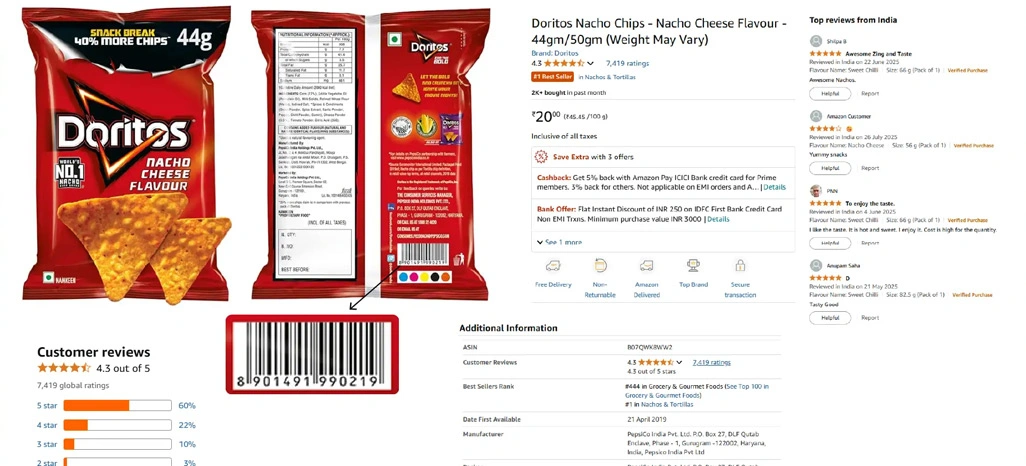
Building a strong competitive intelligence framework requires structured and standardized datasets. Fragmented data often limits the ability to derive actionable insights, making it difficult for businesses to respond effectively to market changes. A unified data approach ensures consistency and reliability across all analytical processes.
With UPC Data Scraping for Retail Price Intelligence, organizations can create comprehensive datasets that provide accurate insights into pricing trends, competitor strategies, and market dynamics. This structured approach enhances visibility and supports data-driven decision-making.
Additionally, implementing Scrape Supermarket Prices and Match Products allows businesses to compare pricing across multiple retailers with precision. This helps identify pricing gaps, optimize promotional strategies, and improve overall market positioning.
Strategic Benefits of Structured Data Models:
| Capability | Advantage | Result |
|---|---|---|
| Unified product mapping | Consistent datasets | Reliable insights |
| Cross-platform comparison | Better benchmarking | Competitive edge |
| Historical tracking | Trend analysis | Improved forecasting |
Research shows that organizations using structured data integration achieve up to 50% improvement in benchmarking accuracy and enhanced pricing strategy effectiveness. This empowers businesses to adapt quickly to changing market conditions and maintain a strong competitive position.
How Retail Scrape Can Help You?
Accurate grocery pricing intelligence requires a combination of advanced technology, scalable infrastructure, and domain expertise. By enabling companies to Scrape Grocery Prices With UPC-Level Matching, we ensure consistent and reliable data across multiple retailers.
Key Capabilities:
- Advanced data extraction from multiple grocery platforms.
- Intelligent product normalization for consistency.
- Real-time monitoring of pricing and promotions.
- Scalable infrastructure for large datasets.
- Custom dashboards for actionable insights.
- Seamless integration with existing systems.
With our expertise in Multi-Retailer Grocery Data Scraping Strategies, businesses can confidently analyze complex datasets and make informed decisions that improve profitability and market positioning.
Conclusion
Accurate grocery price intelligence depends on reliable product matching and consistent data frameworks. Businesses that implement strategies to Scrape Grocery Prices With UPC-Level Matching can significantly improve data accuracy, streamline analytics, and make more confident pricing decisions in competitive markets.
By combining automation, standardized identification, and advanced analytics, companies can fully realize the Grocery Price Scraping Across Multiple Retailers approach to gain deeper market insights and optimize pricing performance. Connect with Retail Scrape today to transform your grocery data into actionable intelligence and drive measurable business growth.
Effortlessly managing intricacies with customized strategies.
Mitigating risks, navigating regulations, and cultivating trust.
Leveraging expertise from our internationally acclaimed team of developers
Reliable guidance and assistance for your business's advancement