Restaurant Competitor Pricing Data: How Restaurant Data Monitoring Service & Market Research Dataset Drive Smarter Retail Decisions
Introduction
The restaurant industry has become extremely competitive in recent years. From independent food outlets to global food chains, businesses constantly adjust prices, introduce promotions, and optimize menus to attract customers.
To stay ahead, restaurants and retail analytics firms increasingly rely on restaurant competitor pricing data, restaurant data monitoring service, and restaurant market research dataset solutions. These data-driven insights allow businesses to monitor competitors, analyze pricing strategies, and make better decisions based on real-time market intelligence.
Retail Scrape solutions enable businesses to collect large-scale restaurant data and convert it into actionable insights that drive growth and profitability.
In this blog, we will explore how restaurant data scraping helps businesses gather competitor pricing information, monitor industry trends, and build a powerful restaurant market research dataset.
Understanding Restaurant Competitor Pricing Data
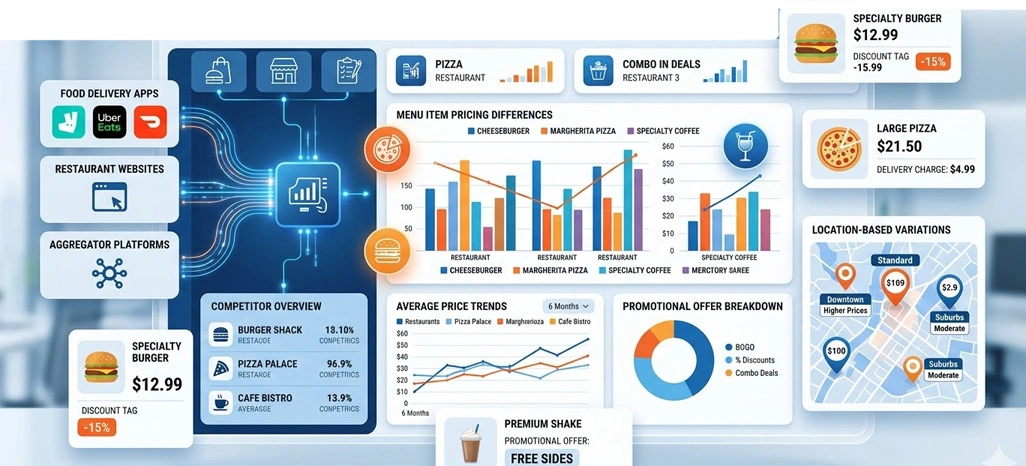
Restaurant competitor pricing data refers to the collection and analysis of pricing information from competing restaurants across various platforms. This data includes menu prices, promotional offers, discounts, delivery charges, and seasonal pricing changes.
Businesses use this data to identify pricing gaps, benchmark against competitors, and adjust their pricing strategies accordingly.
Key Data Points in Restaurant Competitor Pricing Data
A comprehensive competitor pricing dataset typically includes:
- Menu item names
- Category (pizza, burger, beverages, etc.)
- Item prices
- Discounts and promotional offers
- Delivery charges
- Platform-based pricing differences
- Location-based price variations
Retail Scrape platforms collect this data from restaurant websites, food delivery platforms, and aggregator apps to create a detailed competitor pricing intelligence system.
Why Restaurants Need a Restaurant Data Monitoring Service
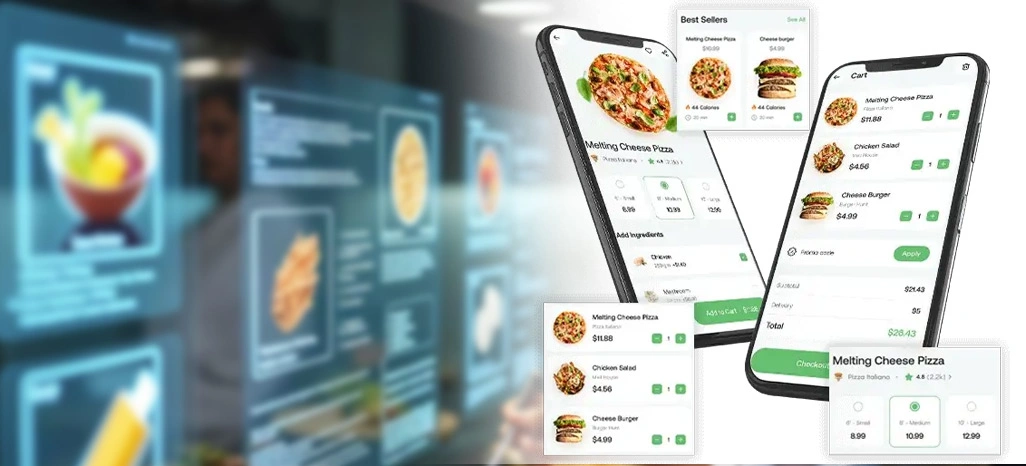
Manual tracking of competitor pricing is almost impossible due to frequent updates and large volumes of data. This is where a restaurant data monitoring service becomes essential.
A restaurant data monitoring service automatically collects, updates, and organizes data from multiple sources, enabling businesses to track competitors continuously.
Benefits of Restaurant Data Monitoring Service
- 1. Real-Time Competitor Price Tracking
Restaurants can monitor competitor price changes instantly. This helps them adjust menu prices quickly to stay competitive. - 2. Promotion and Discount Analysis
Food delivery platforms often run time-limited offers. Monitoring these promotions helps restaurants design better campaigns. - 3. Menu Intelligence
Restaurants can analyze trending dishes, new menu launches, and seasonal items introduced by competitors. - 4. Market Expansion Insights
Restaurant chains planning expansion can analyze pricing patterns across cities using a restaurant data monitoring service.
Role of Restaurant Market Research Dataset in Business Strategy
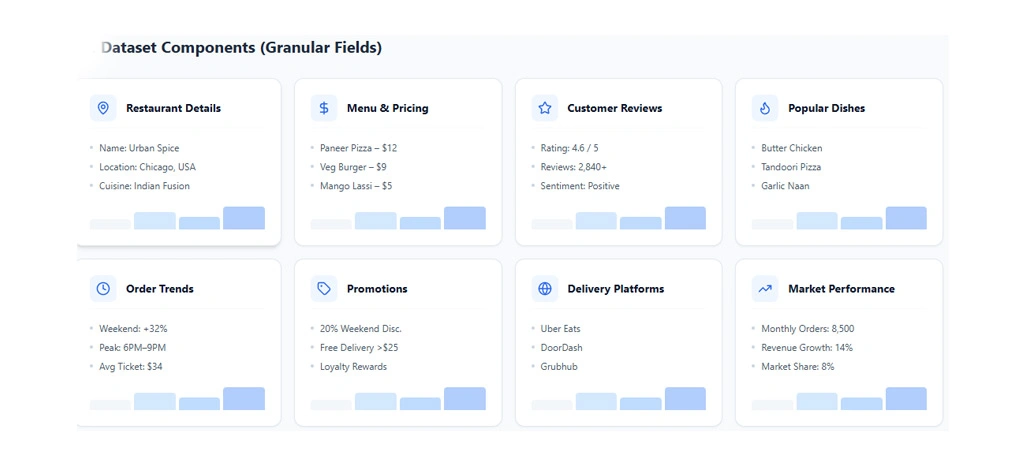
A restaurant market research dataset is a structured collection of restaurant industry data used for strategic analysis and forecasting.
These datasets are valuable for:
- Restaurant chains
- Market research firms
- Food delivery platforms
- Retail analytics companies
- Investment firms
With the help of a restaurant pricing dataset, businesses can understand the broader restaurant industry landscape.
What a Restaurant Market Research Dataset Includes
A well-structured dataset may contain:
- Restaurant name and location
- Cuisine type
- Menu items and pricing
- Customer ratings and reviews
- Popular dishes
- Order trends
- Promotional campaigns
- Delivery platform availability
Retail Scrape solutions help businesses build such datasets by extracting data from multiple restaurant platforms at scale.
How Retail Scrape Collects Restaurant Competitor Pricing Data
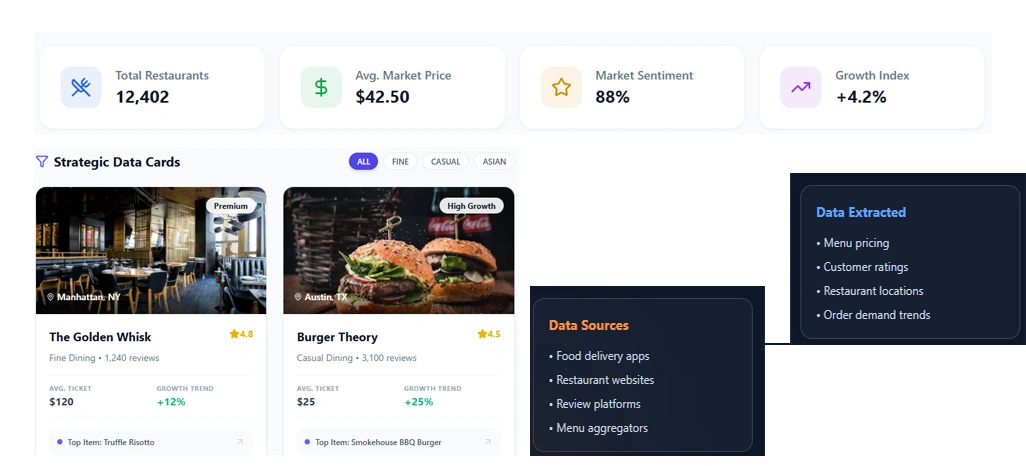
Retail Scrape technology automates the process of collecting restaurant data from multiple digital sources.
Step 1: Identifying Data Sources
Data is collected from sources such as:
- Restaurant websites
- Food delivery apps
- Restaurant listing platforms
- Online menus
Step 2: Automated Data Extraction
Retail Scrape tools extract pricing and menu information automatically and store it in structured databases.
Step 3: Data Cleaning and Structuring
Raw scraped data is processed to remove duplicates, errors, and inconsistencies.
Step 4: Dataset Creation
The cleaned data is transformed into a restaurant market research dataset for analytics and reporting.
Key Use Cases of Restaurant Data Monitoring Service
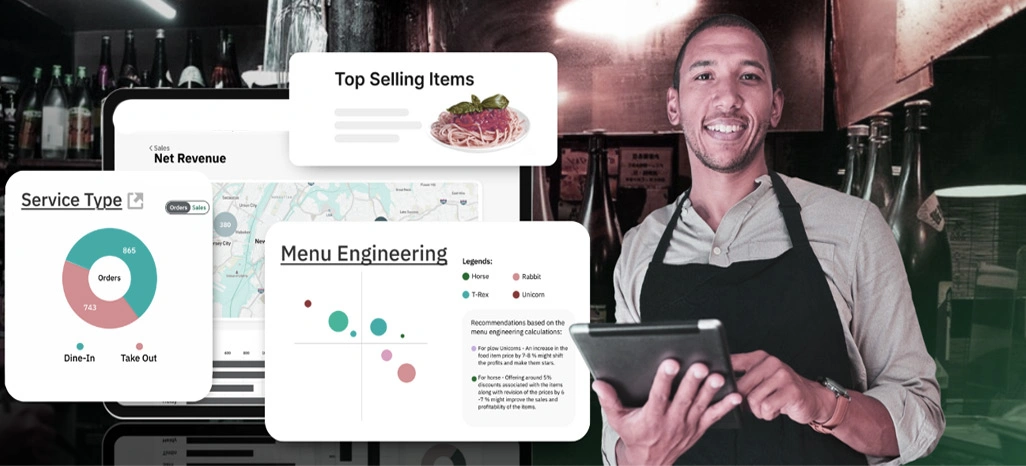
Businesses across the food ecosystem use restaurant data monitoring services in various ways.
Competitive Pricing Strategy
Restaurant brands use restaurant competitor pricing data to set competitive prices and maximize profit margins.
Market Trend Analysis
By analyzing a restaurant market research dataset, companies can identify trending cuisines, popular menu items, and seasonal demand patterns.
Delivery Platform Optimization
Food delivery aggregators use restaurant data monitoring service solutions to track restaurant availability, menu updates, and pricing differences across platforms.
Location-Based Price Analysis
Restaurants can analyze how menu prices vary across cities and neighborhoods
How Restaurant Market Research Dataset Helps Investors
Investors and venture capital firms also rely on restaurant market research dataset insights to evaluate investment opportunities.
They analyze:
- Fast-growing restaurant chains
- Popular cuisines in specific regions
- Customer sentiment from reviews
- Pricing competitiveness
Retail Scrape data enables investors to make data-backed decisions in the restaurant industry.
Challenges in Collecting Restaurant Competitor Pricing Data
While restaurant data is widely available online, collecting it efficiently presents several challenges.
Dynamic Pricing Updates
Restaurants frequently update prices and promotions.
Large Data Volume
Thousands of restaurants across multiple platforms generate huge datasets.
Data Structure Differences
Menu formats vary widely across platforms, requiring advanced parsing methods.
Retail Scrape solutions overcome these challenges by using automated scraping and intelligent data processing.
Future of Restaurant Data Monitoring Services
The future of restaurant analytics will be heavily driven by data and automation. Businesses will increasingly rely on restaurant data monitoring service solutions to gain real-time market intelligence.
Emerging trends include:
- AI-driven menu analytics
- Real-time competitor price alerts
- Predictive pricing models
- Geo-based restaurant demand analysis
These innovations will further enhance how businesses use restaurant competitor pricing data and restaurant market research datasets.
Conclusion
In the modern restaurant industry, decisions based on intuition alone are no longer enough. Businesses must rely on accurate data to remain competitive.
By leveraging restaurant competitor pricing data, businesses can benchmark their pricing strategies effectively. A restaurant data monitoring service ensures that pricing and menu insights remain updated in real time, while a comprehensive restaurant market research dataset provides the broader industry intelligence needed for long-term planning.
Retail Scrape empower restaurants, analytics firms, and investors to transform raw restaurant data into meaningful insights that drive smarter business decisions and sustainable growth.
Effortlessly managing intricacies with customized strategies.
Mitigating risks, navigating regulations, and cultivating trust.
Leveraging expertise from our internationally acclaimed team of developers
Reliable guidance and assistance for your business's advancement