How Can Product Rating Monitoring for Competitive Intelligence Uncover 30% More Rating Shifts?
Introduction
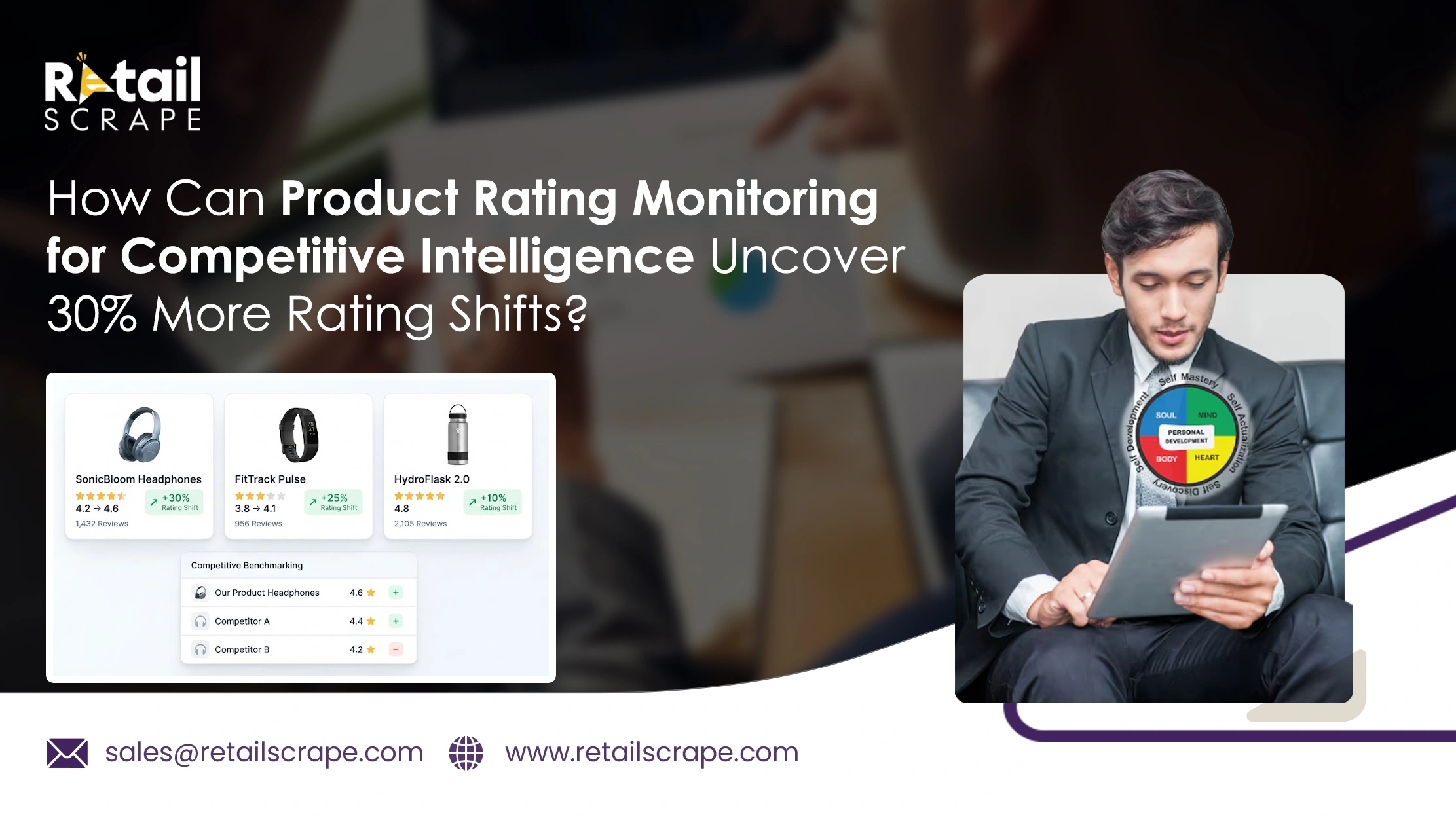
In competitive ecommerce markets, ratings can change quickly as customers respond to product quality, service, pricing, and availability. Product Rating Monitoring for Competitive Intelligence helps businesses observe these movements systematically, compare rivals, and identify meaningful rating changes before they influence purchasing decisions. Consistent tracking can also support faster commercial responses.
Businesses can combine Product Rating Monitoring with structured collection methods to evaluate rating patterns across marketplaces. A Web Scraping API Product Rating Data solution can gather product scores, review counts, rating distributions, and related information from multiple sources, creating a consistent dataset for comparison, trend analysis, and reporting.
When rating information is collected at regular intervals, teams can identify upward and downward movements more accurately. These insights help brands evaluate customer perception, prioritize product improvements, assess competing products, and refine marketplace strategies using evidence instead of isolated rating snapshots. Consistent monitoring also creates a historical foundation for understanding market changes.
Identifying Rating Shifts Through Continuous Market Observation
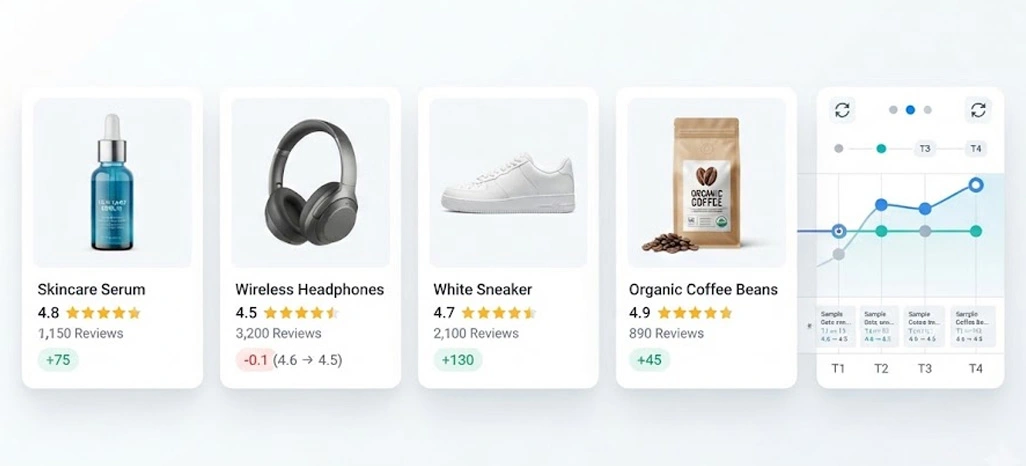
Rating movements can reveal changes in customer satisfaction, product quality, fulfillment performance, and promotional outcomes. Automated Product Rating Monitoring enables businesses to collect these signals at scheduled intervals instead of relying on occasional manual checks. This creates a structured view of rating movements and makes unusual changes easier to identify across competitive product categories.
Businesses can also Scrape Product Rating Monitoring Tools to organize information from multiple ecommerce sources and compare products using consistent metrics. Tracking average scores, rating counts, and distribution changes helps analysts determine whether a shift represents a temporary fluctuation or a broader customer response. Historical records make these comparisons more meaningful.
| Monitoring Area | Business Value |
|---|---|
| Average rating | Measures customer perception |
| Rating volume | Indicates engagement |
| Rating distribution | Shows satisfaction patterns |
| Historical movement | Identifies changing trends |
An Ecommerce Scraping API can further support structured collection by delivering marketplace information in a consistent format. This reduces repetitive data handling and allows teams to process larger product catalogs while maintaining comparable records across different ecommerce sources and monitoring periods.
A 30% improvement in identifying rating shifts can provide broader visibility into changing market sentiment when monitoring is performed consistently. These insights allow analysts to investigate significant movements, evaluate competitor performance, and prioritize products requiring closer attention before rating changes become more influential.
Connecting Competitor Ratings With Assortment Strategy
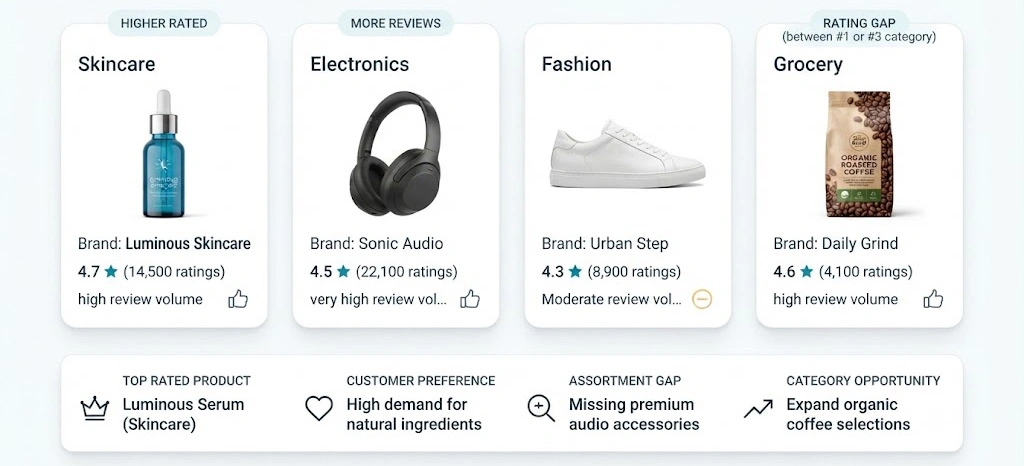
Rating information can provide valuable context when retailers evaluate competing products, categories, and customer preferences. Product Ratings Competitive Intelligence helps analysts interpret rating movements alongside other market signals, allowing businesses to understand which products are receiving stronger or weaker customer responses. This creates a more informed foundation for competitive evaluation.
When teams analyze Competitor Product Rating Monitoring Data, they can compare rating scores, review volumes, and distribution patterns across similar products. These comparisons can reveal gaps between competing offerings and indicate where customer expectations may be changing. Such findings can support product selection, merchandising decisions, and category-level performance assessments.
| Competitive Signal | Strategic Meaning |
|---|---|
| Rating improvement | Stronger customer response |
| Rating decline | Possible product concern |
| Review growth | Increasing engagement |
| Rating gap | Competitive difference |
Competitor Assortment Intelligence can become more valuable when rating information is evaluated alongside product categories and competitor positioning. Retailers can identify products receiving consistently positive feedback and compare them with lower-rated alternatives. This supports more focused assortment evaluation without depending solely on pricing or promotional information.
A structured approach to rating comparison also helps businesses identify recurring customer response patterns. Analysts can use these observations to prioritize product evaluations, examine category opportunities, and understand how rival products perform over time. This makes rating data useful for both immediate decisions and longer-term assortment planning.
Improving Response Speed With Frequent Rating Updates
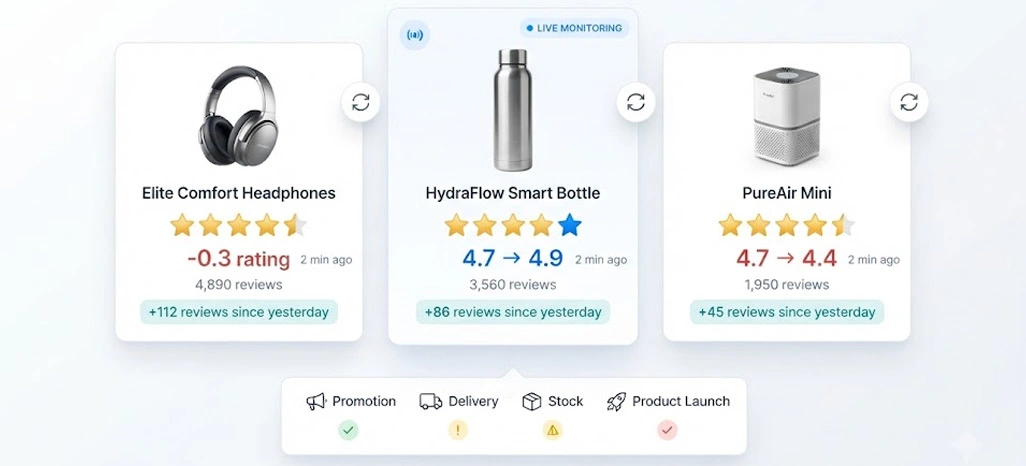
Fast-moving ecommerce marketplaces can experience rating changes following product launches, stock interruptions, delivery issues, promotions, or customer experience changes. Real Time Product Rating Monitoring Data helps businesses observe these movements more frequently, allowing analysts to identify important shifts closer to when they occur and investigate the factors potentially influencing customer response.
Rating information becomes more useful when combined with operational marketplace signals. Customer Rating Monitoring for Brands can help businesses compare customer responses across products and periods, while related information can provide context for sudden increases or decreases. This supports a broader understanding of why rating movements may occur.
| Data Point | Monitoring Purpose |
|---|---|
| Current rating | Tracks customer perception |
| New reviews | Shows recent feedback |
| Rating distribution | Reveals response patterns |
| Product status | Adds marketplace context |
Real-Time Product Availability can provide additional context when rating changes appear alongside stock fluctuations. For example, businesses can examine whether product availability interruptions coincide with changing customer responses. Connecting these signals can help analysts separate operational issues from product-quality concerns and prioritize further investigation.
Frequent monitoring also supports faster internal reporting and response planning. Instead of waiting for periodic manual reviews, teams can maintain updated records and identify products that require attention sooner. This can improve the speed of competitive analysis while giving decision-makers a clearer view of evolving customer sentiment.
How Retail Scrape Can Help You?
For businesses managing large product catalogs, Product Rating Monitoring for Competitive Intelligence can become difficult when marketplace information changes frequently. We can support structured collection of product ratings, review counts, rating distributions, and competitor information across relevant ecommerce sources. This approach reduces repetitive manual checks and creates organized datasets for comparison and reporting.
We can help businesses by:
- Collecting rating information across multiple ecommerce platforms
- Tracking changes at scheduled intervals
- Structuring product and competitor information consistently
- Supporting historical comparison of rating movements
- Filtering datasets according to products or categories
- Preparing information for analysis, dashboards, and reporting
With Ratings & Reviews Intelligence, teams can connect rating changes with broader customer sentiment and competitive performance. Ecommerce Review and Rating Tracking can further support recurring evaluation, helping businesses identify important shifts, prioritize product-level actions, and improve decisions using organized marketplace intelligence.
Conclusion
Customer ratings provide valuable signals about how products are performing in competitive ecommerce environments. Product Rating Monitoring for Competitive Intelligence helps businesses interpret these signals through continuous comparison, historical tracking, and structured analysis. By identifying rating movements earlier, teams can investigate potential customer concerns, evaluate competing products, and respond with more informed commercial strategies.
Consistent monitoring also makes rating data more useful for broader market analysis. Ecommerce Review and Rating Tracking can help businesses connect review activity with product performance, customer perception, and competitive changes. Build a stronger monitoring strategy with Retail Scrape and turn changing product ratings into actionable market intelligence.