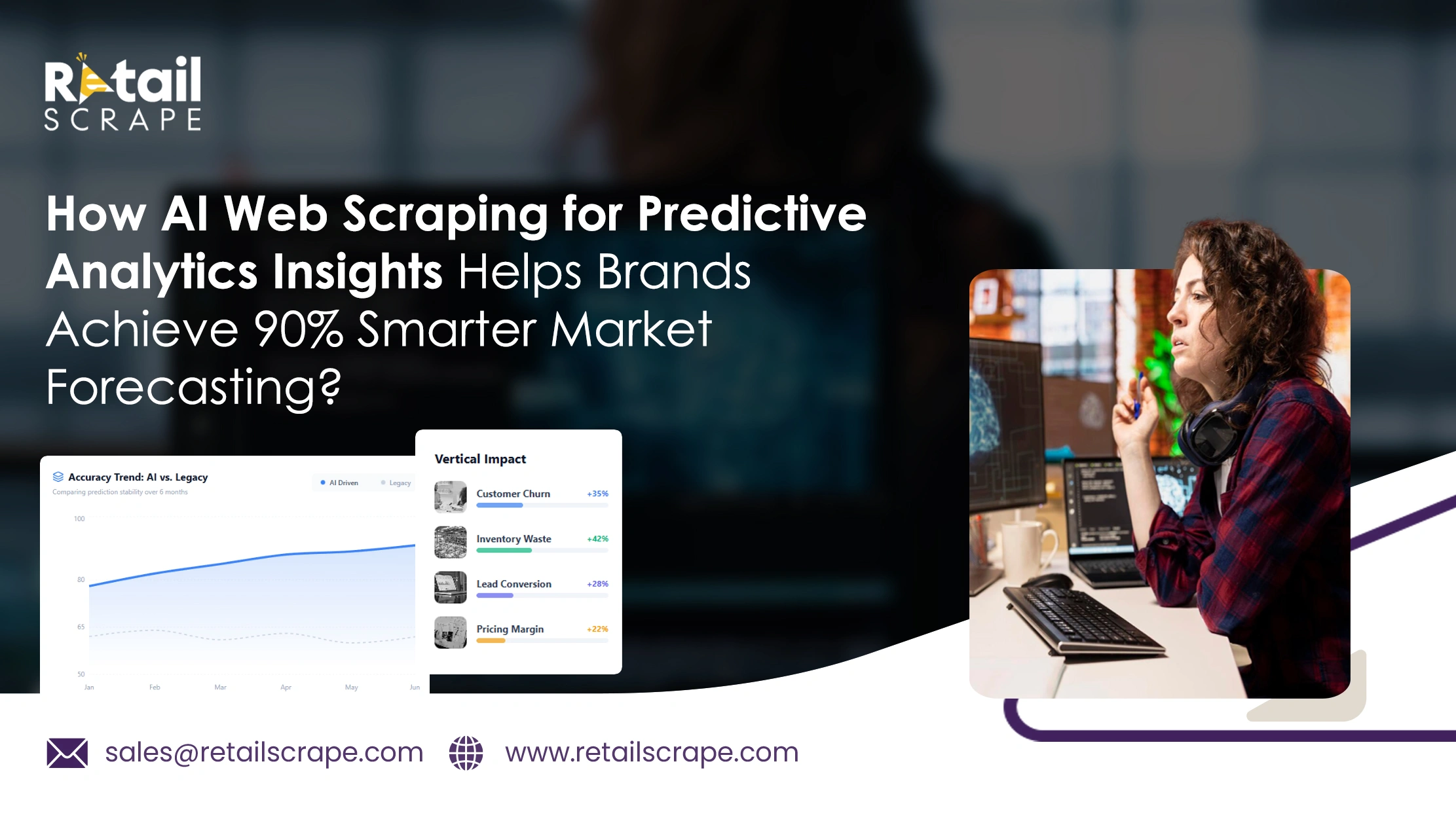
How AI Web Scraping for Predictive Analytics Insights Helps Brands Achieve 90% Smarter Market Forecasting?
Introduction
Modern markets move faster than ever, making traditional forecasting models increasingly unreliable. This is where AI Web Scraping for Predictive Analytics Insights becomes essential. By collecting large volumes of structured and unstructured data from eCommerce platforms, competitor websites, social media, and marketplaces, companies can identify emerging trends before they impact revenue. AI-powered algorithms then analyze this data to forecast demand, pricing fluctuations, and customer behavior patterns with remarkable precision.
According to industry research, companies integrating advanced data extraction and predictive modeling tools experience up to 90% more accurate forecasting and reduce decision-making time by nearly 60%. Such technologies enable businesses to transform raw web data into actionable insights that guide strategic planning.
Additionally, Web Scraping Powered Predictive Analytics enables organizations to transform massive online datasets into predictive intelligence that helps anticipate market movements. As organizations seek more accurate forecasting tools, AI-powered scraping combined with predictive analytics is becoming a core component of modern business intelligence strategies.
Eliminating Market Visibility Gaps Through Continuous Data Intelligence

Businesses frequently struggle with incomplete market visibility when relying on traditional research methods. Reports based on historical datasets or periodic surveys often fail to capture fast-moving shifts in digital marketplaces. With the support of Predictive Business Intelligence Using Automated Data Collection, companies can collect structured market insights automatically without manual monitoring.
Another important technological driver is Machine Learning Web Scraping for Insights, which helps analysts detect patterns across large datasets. Machine learning algorithms examine pricing trends, customer reviews, and competitor product changes to reveal hidden relationships that influence future demand.
These systems rely heavily on Web Data for Predictive Modeling, enabling analysts to build forecasting models based on structured web datasets collected from multiple digital channels. When businesses feed predictive models with large-scale web intelligence, they can identify seasonal demand shifts and anticipate competitive movements more effectively.
Forecasting Capability Comparison:
| Forecasting Approach | Data Source | Accuracy Rate | Update Frequency |
|---|---|---|---|
| Historical Reporting | Internal records | 55% | Monthly |
| Manual Market Research | Surveys and reports | 60% | Quarterly |
| Automated Data Intelligence | Web-based datasets | 85% | Real-time |
Organizations implementing these predictive frameworks gain a stronger understanding of evolving market dynamics. Instead of reacting to market changes after they occur, companies can proactively adjust inventory planning, marketing campaigns, and pricing strategies based on early signals derived from continuous data collection.
Converting Large Online Datasets Into Actionable Insights
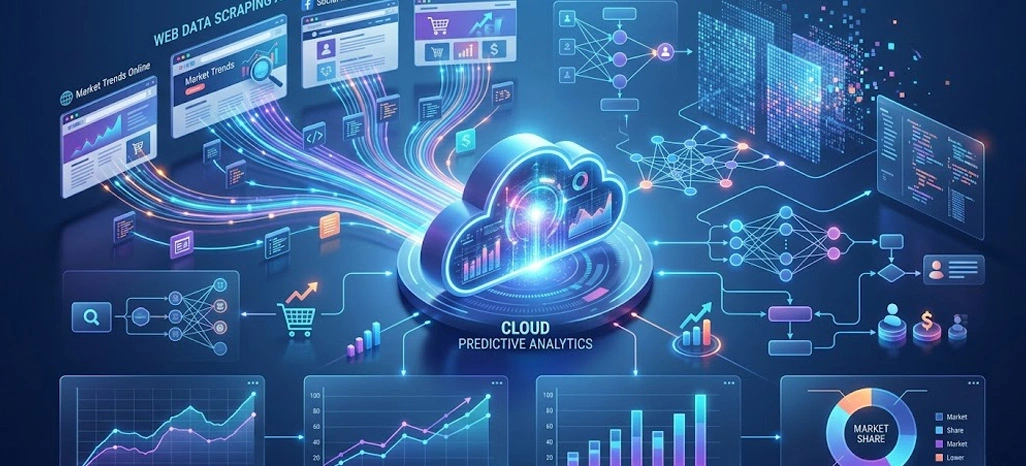
Collecting information from digital platforms generates enormous datasets, but raw data alone does not produce meaningful intelligence. Organizations must transform scattered online information into structured formats before predictive systems can interpret it effectively. Through the use of a Web Data Scraping API for Analytics, companies can integrate multiple data sources into centralized analytics platforms.
To process the large volumes of information gathered online, organizations increasingly rely on Scalable Predictive Analytics Using Cloud Scraping. Cloud-based infrastructures allow companies to run predictive models across millions of data points without affecting system performance.
Another major capability involves Real-Time Web Scraping for Market Prediction, which allows analysts to monitor changes in product listings, demand signals, and competitor strategies as they occur. Organizations also deploy an Automated Predictive Analytics Data Extraction Tool to streamline large-scale data collection.
Predictive Data Processing Framework:
| Processing Stage | Description | Result |
|---|---|---|
| Data Collection | Automated extraction from web sources | Raw datasets |
| Data Structuring | Cleaning and organizing information | Structured tables |
| Predictive Modeling | AI-based analysis | Forecast insights |
| Decision Support | Visualization dashboards | Strategic planning |
When organizations implement structured data pipelines, predictive models become significantly more accurate. These systems convert massive online datasets into actionable intelligence that supports strategic forecasting and faster decision-making.
Enhancing Pricing Strategies Through Predictive Intelligence Systems
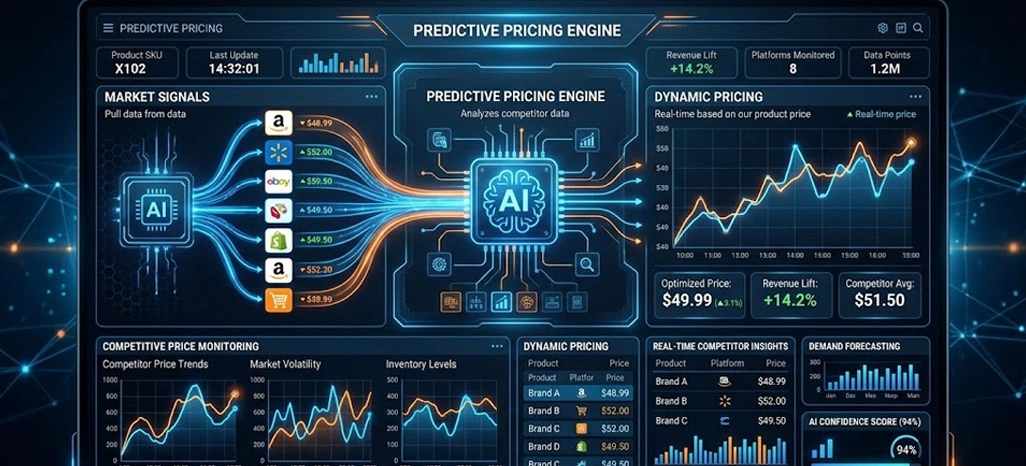
Pricing strategies are among the most influential factors affecting revenue performance and competitive positioning. Predictive analytics systems enable organizations to analyze market patterns and anticipate pricing opportunities. With Predictive Pricing Strategy Using Web Scraping Data, businesses can evaluate competitor pricing behavior, seasonal demand patterns, and promotional trends to determine optimal price points.
Predictive intelligence also supports the development of Dynamic Pricing Solutions, which allow companies to adjust product prices automatically based on market signals. These systems analyze competitor listings, consumer demand, and supply availability to determine the most effective pricing strategies.
Continuous market observation is another key component of pricing intelligence. Many organizations analyze competitor models using AI Powered Web Scraping Services Pricing, which helps track how other brands structure their pricing strategies across marketplaces.
Predictive Pricing Impact Analysis:
| Pricing Model | Data Input | Response Speed | Profit Potential |
|---|---|---|---|
| Manual Pricing | Limited competitor insights | Slow | Low |
| Rule-Based Pricing | Historical sales data | Moderate | Medium |
| Predictive Intelligence Pricing | Real-time market signals | Instant | High |
Predictive systems also support proactive demand forecasting. By studying consumer search behavior, product reviews, and inventory changes, businesses can estimate purchasing trends before they appear in sales reports. When organizations combine predictive intelligence with automated pricing models, they strengthen their ability to respond to market changes quickly.
How Retail Scrape Can Help You?
Data-driven decision-making has become essential for businesses operating in fast-moving digital markets. With AI Web Scraping for Predictive Analytics Insights, we help organizations collect and analyze real-time market data from multiple digital channels.
Key capabilities include:
- Continuous tracking of competitor product listings across marketplaces.
- Monitoring changing product availability across eCommerce platforms.
- Capturing customer reviews and sentiment trends from online sources.
- Identifying emerging product demand signals across digital channels.
- Monitoring promotional campaigns and seasonal product movements.
- Tracking marketplace trends across multiple global regions.
Our predictive data systems also integrate Real-Time Price Monitoring technologies that help brands analyze competitor pricing activity instantly.
Our platform is built to support enterprise-scale intelligence powered by Scalable Predictive Analytics Using Cloud Scraping, enabling businesses to process large volumes of data efficiently while maintaining forecast accuracy.
Conclusion
Data-driven forecasting is transforming how modern businesses plan strategies, manage pricing, and anticipate consumer demand. Companies integrating AI Web Scraping for Predictive Analytics Insights into their analytics frameworks can detect market changes earlier and make decisions with far greater accuracy.
Advanced solutions supported by Automated Predictive Analytics Data Extraction Tool technologies allow companies to convert massive online datasets into reliable predictive intelligence. Partner with Retail Scrape today and transform your market intelligence strategy.
Effortlessly managing intricacies with customized strategies.
Mitigating risks, navigating regulations, and cultivating trust.
Leveraging expertise from our internationally acclaimed team of developers
Reliable guidance and assistance for your business's advancement